
Hotel website design that drives direct bookings
Hotel website design that shows your atmosphere, makes rooms easy to compare and takes guests straight to booking. Built around your booking engine, multilingual from day one and tracked so you see which channel brings bookings.
- Our own hospitality brand
- Booking engine integrated
- Bookings tracked by channel
- Goal
- More direct bookings
- Booking
- Your booking engine built in
- Guests
- Multilingual by design
- Tracking
- Bookings by channel, visible
Why many hotel websites lose bookings to the OTAs.
The path to booking is too long
Guests discover the hotel on an OTA, visit your own site and then hunt for the Book button. If the booking engine is buried or opens in a mismatched layout, they go back and book through the OTA, commission included.
Rooms stay abstract
Category names like Superior or Deluxe mean little to guests. Without large photos, size, amenities and an easy comparison, they decide wherever the information is presented better.
Nobody knows what the website earns
Ads are running and newsletters go out, but which channel actually brings bookings stays unclear. Without tracking through to the booking engine, budget flows into channels that do not sell rooms.
Hotel websites we have built.
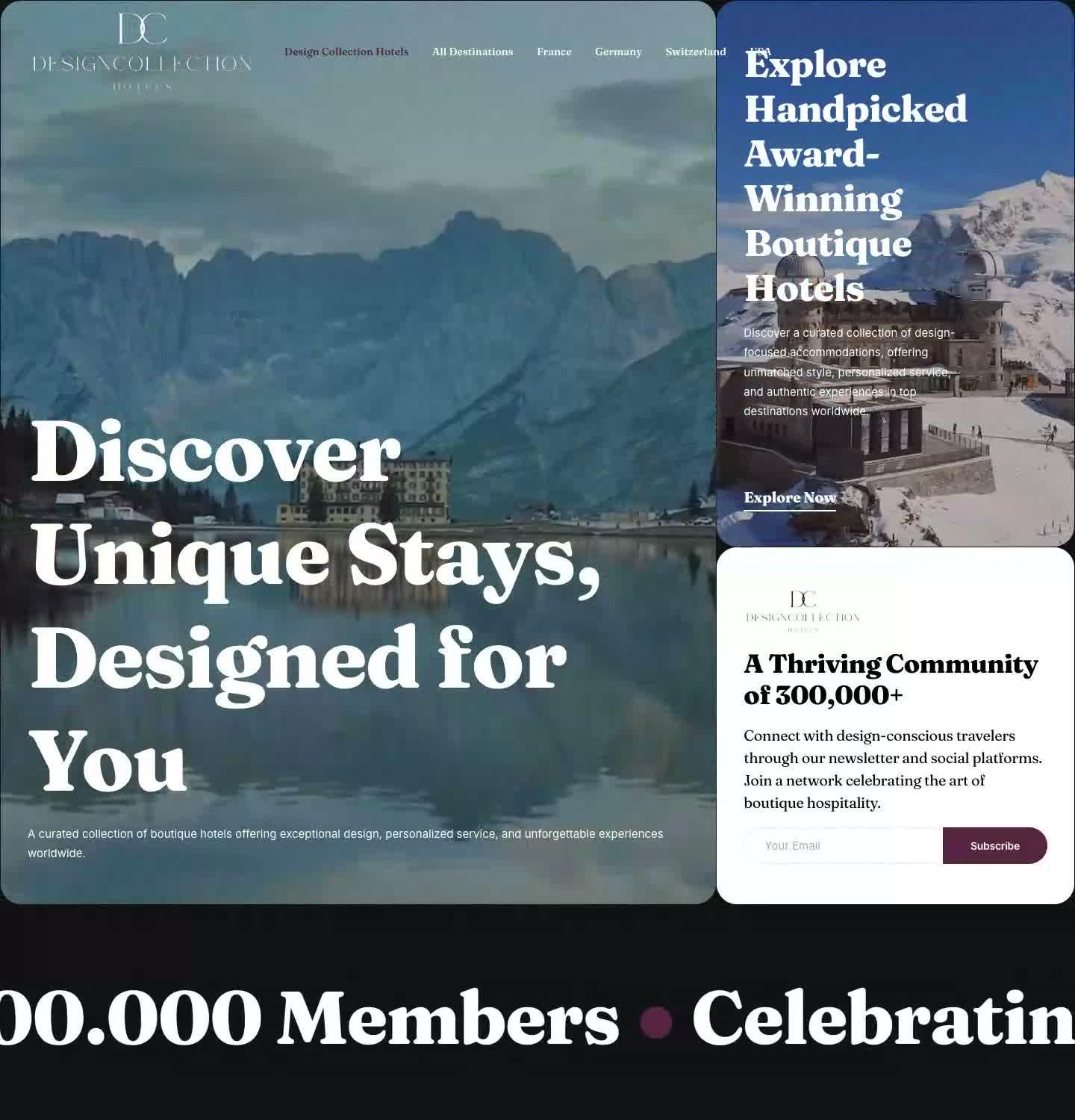
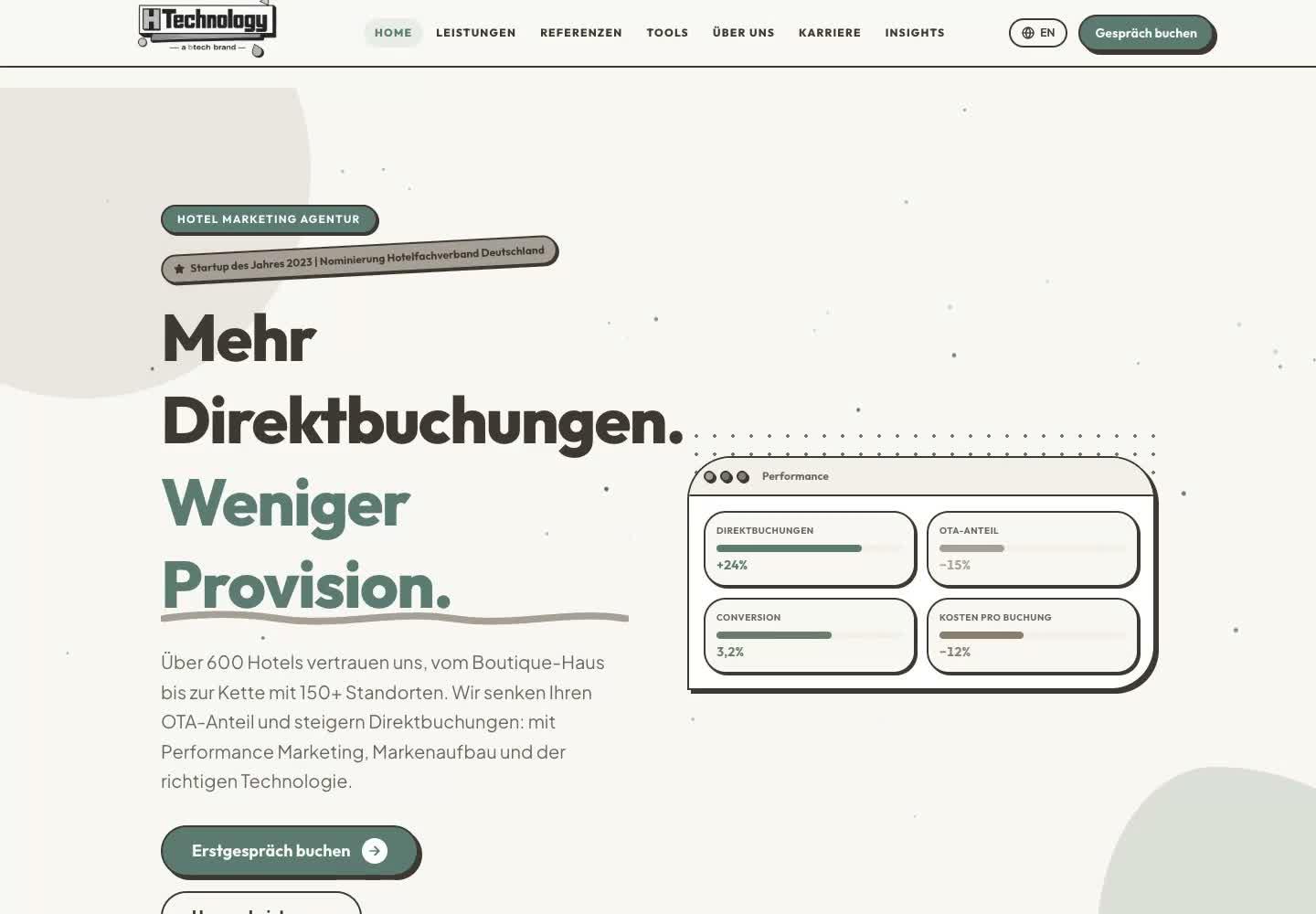
For Townhome Hotels in Hanover, a cinematic opening and generous room views connect the feeling of arriving home with booking links throughout the site. Design Collection Hotels guides visitors editorially from countries and cities to individual properties. With HTechnology we run our own hospitality brand, complete with an OTA calculator and website check for hoteliers.
Townhome Hotels
The feeling of home starts before arrival.
What a high-performing hotel website needs.
Cinematic first impression
Video and large imagery convey what a stay feels like from the first second, without sacrificing load time.
Room pages built for comparison
Every category with a gallery, size, amenities and a direct booking link, so guests can choose with confidence.
Booking engine integration
Your existing booking engine is embedded cleanly and sits one tap away on every page, including on mobile.
Multilingual content
Proper language versions with correct technical markup, so international guests find the right page on Google.
Local search visibility
Hotel structured data for location, amenities and rooms, plus content about the area and occasions that surfaces on Google and in AI answers.
Packages, upsells & campaigns
Dedicated pages for packages, room upgrades and seasonal offers raise the value of each booking and work as landing pages for Google Ads and social campaigns.
A hotel website has two jobs at once. It has to make people want to stay, and then take them to booking without friction. Many properties only manage one of the two: beautiful photos with no clear booking path, or a functional site with no atmosphere. Good hotel website design therefore starts not with colours and fonts but with how guests actually decide today. They compare on OTAs, check the hotel's own site, browse photos on their phone and book wherever it is easiest. This guide covers the building blocks of a direct booking website and how we apply them in our own hotel projects.
01Direct booking website vs OTA commission: your site as a sales channel
OTAs deliver reach, but every booking they bring carries a commission. Your own website is where you win guests without that cost. That only works if booking on your site is at least as easy as on the OTA. In practical hotel website design, the Book button is visible on every page, the availability search is close at hand and the hand-off to the booking engine feels like part of the same site.
Then give guests reasons to book direct: packages only available on your website, a named contact, flexible terms. The OTA calculator on our hospitality brand HTechnology lets hoteliers see what commission means for their own property.
02Room presentation: the heart of a boutique hotel website
For many guests the rooms page is the most important page on the site. It is where they choose between two categories, or between you and the hotel down the road. Strong hotel web design shows every category with large photos, size, bed type, amenities and view, laid out so guests can compare categories at a glance.
At Townhome Hotels in Hanover, room categories, amenities and large images help guests pick the right option for short or extended stays. Dedicated content for business travellers speaks to a group that plans very differently from leisure guests.
03Hotel booking engine integration without losing the guest
Most hotels already run a booking engine and a channel manager. A new website does not replace them, it integrates them properly. Guests should be able to pick dates and party size on the website itself, room pages should link straight to the matching category in the booking engine, and the whole flow should work as well on a phone as on a desktop.
We also set up tracking so you can see which pages and channels lead to booking requests. That way decisions about content and advertising rest on real data rather than guesswork.
04Multilingual hotel website: welcoming international guests
International guests search in their own language and expect answers in it. A multilingual hotel website needs complete language versions with their own URLs and correct hreflang markup, so Google shows each guest the right version. Machine-translated snippets dropped into a German page quickly feel impersonal.
Every language version is a sales channel of its own. Packages, booking links and offers belong in every language, not just the German site. Tracking split by language and country shows which markets book direct and where advertising pays off.
05Local SEO and hotel structured data
Many bookings start with a search about location and occasion: hotel near the trade fair, boutique hotel in the old town, conference hotel with parking. Your website should answer those questions with its own content. Schema.org structured data for hotel, address, amenities and rooms helps search engines and AI assistants understand your property and recommend it.
Design Collection Hotels shows how structure creates visibility: country and city pages organise the collection, and hotel cards combine imagery, a short description and onward links.
06Imagery and motion for a hotel website that still loads fast
A boutique hotel in particular sells character: interiors, architecture, location and hosts. Large images, moving introductions and distinctive typography make that character tangible online. Design Collection relies on full-width imagery and a striking serif typeface, while Townhome opens with a cinematic introduction tied directly to booking.
So the imagery never slows the site down, we optimise every photo and video for each device. Your website stays fast, even on a mobile connection. That is a sales factor: many guests book on their phone, and every delay sends them back to the OTA.
How we build your hotel website.
- 01
Audit & booking path
We review your current website, booking engine and guest segments. From that we define the page structure with a clear route to direct booking.
- 02
Design & imagery
We design the site in your brand and plan photography, video and room pages. You see and approve every step before we build.
- 03
Build & integration
We build the site, integrate the booking engine and set up language versions, structured data and tracking. Everything is tested on every device.
- 04
Launch & growth
After launch we measure which pages and channels bring bookings, then keep optimising the booking path, offers and campaigns. Your share of direct bookings grows on real data.
Hotel website design: frequently asked questions
It depends on scope, languages and features. A single page starts in the low four figures, a multilingual hotel website with room pages and booking integration is above that. After the first call you receive a fixed-price quote.
A complete hotel website typically takes four to eight weeks. The schedule is fixed before we start, so you can plan the launch around your season.
Yes. We do not replace your booking engine or channel manager, we integrate them into the new website. Guests can reach booking from every page, including straight from each room category.
We connect the website and booking engine to GA4 and, if you advertise, to Google Ads conversions. You see which channel and which page brings bookings and revenue. We use that data to keep optimising after launch, and your team can adjust offers in the CMS whenever needed.
If you need it, yes. Each language gets its own version with its own URL and correct technical markup, so Google shows international guests the right language.
We migrate content, redirect old addresses cleanly and preserve your existing Google rankings. The move happens without losing visibility.
Rethinking your hotel website?
Send us your hotel website address. Within 24 hours you get an initial review with concrete ideas for winning more direct bookings.
Or email us directly: hello@btechnology.de